


Introduction
Becoming debt-free fast is not just a dream — it’s possible with the right plan.
If you’ve been struggling to manage loans and credit card bills, this guide on how to become debt-free fast will help you take charge of your money and future.
Key Takeaways
xcessive debt can hurt your credit score and limit future borrowing ability.
You can attack debt using methods like avalanche or snowball — whichever fits your psychology.
Become Debt-Free Fast by Cutting expenses and increasing income are indispensable tools in your debt-freedom arsenal. for details see my blog 5 simple money lessons
Consolidation, balance transfers, and negotiation can help reduce cost and hassle.
Professional advice (credit counseling) may help when you’re overwhelmed.https://growthwithvikas.com/money-lessons-2025-26/
1. Understand Your Debt Fully
Before learning how to become debt-free fast, you need to know where your money is going.
Track your spending and highlight unnecessary expenses.card bills, and monthly obligations.
List each debt’s principal, interest rate, minimum payment, and due date.
When you know exactly how much you owe and at what cost, you gain clarity.
You can see which debts are bleeding you dry (high interest), which are manageable, and which ones need urgent attention.
Also, confirm that your essential expenses plus debt payments are less than your income.
If not, you may already be operating at a deficit — requiring drastic adjustments or income boosts.
2. Plan a Targeted Repayment Strategy
Throwing extra money at random debts may feel good — but to optimize results, strategize smartly.
Two popular methods:
a) Avalanche Method (Interest-First):
Pay minimums on all debts, then direct extra funds to the one with the highest interest rate.
This saves money in interest over time and speeds up payoff on costly debts.
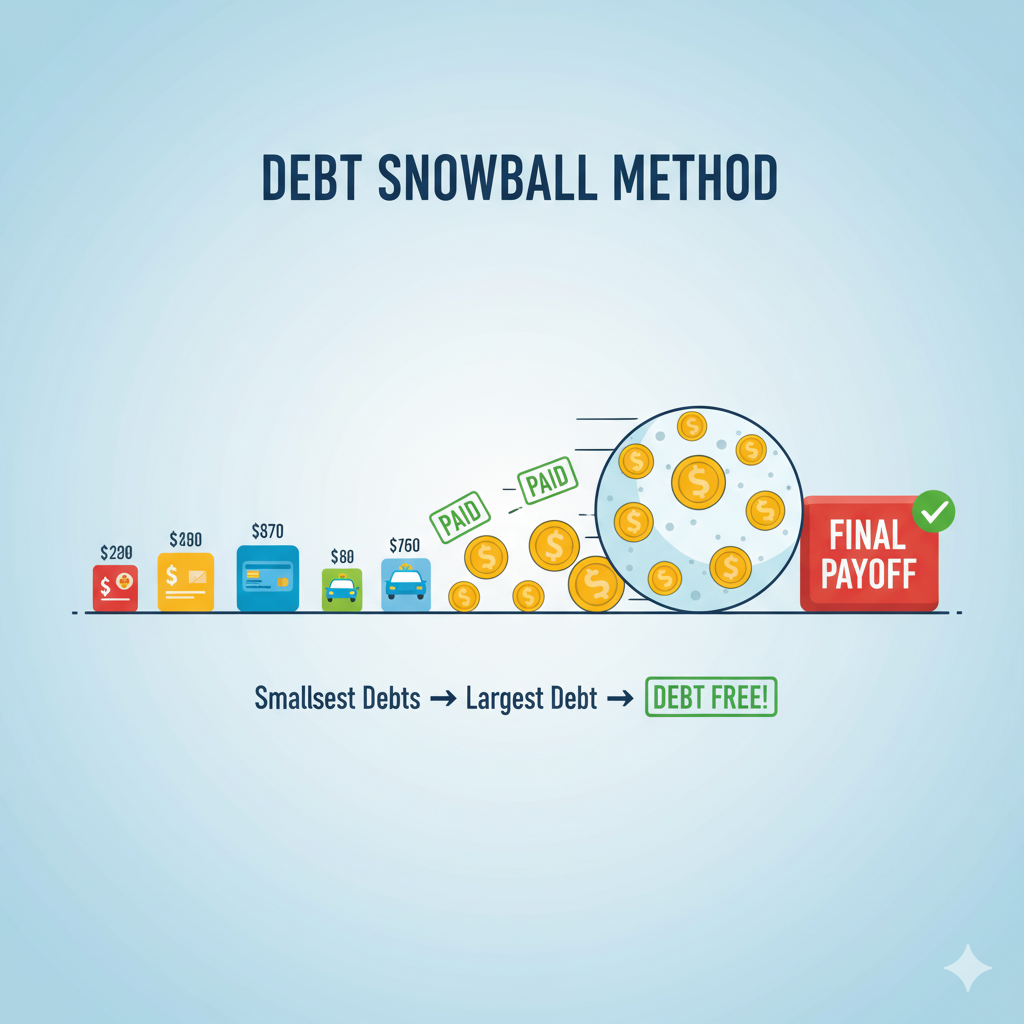
b) Snowball Method (Smallest-Balance First):
Pay off the smallest debt first, then roll that payment into the next smallest, and so on.
Though not always mathematically optimal, this method gives psychological wins that build momentum.
Decide which method suits your temperament — whether you prefer lower cost (avalanche) or quicker wins (snowball).
3. Check & Improve Your Credit Profile
Your credit report tells a deeper story.
Request your credit report from the bureaus (or from your country’s equivalent).
Look for errors, late payments, or high credit utilization (using a large portion of your available credit).
Errors can drag down your score — and they’re often fixable.
Correcting mistakes (e.g., wrong late payment entries) can boost your score.
Also, keep credit usage low (e.g., under 30% of credit limit) and avoid opening many new credit lines unnecessarily.
4. Consolidate or Transfer Where Feasible
If you have multiple high-interest debts, combining them under a lower-interest instrument can simplify and reduce cost:
-
Debt Consolidation Loan: A single loan that pays off multiple debts. You deal with one payment and possibly a lower overall rate.
-
Balance Transfer Credit Card: Move high-interest credit card debt to a card offering 0% interest for a time (6–18 months). Be sure to pay it off before the promotional rate ends.
-
Home Equity / HELOC: If you own a home with equity, you may borrow against it to pay off higher-cost debt. Be careful — this often converts unsecured debt into secured debt (your home becomes collateral).
Each option has risk and cost — read terms and fees carefully before proceeding.
5. Increase Your Monthly Debt Payments
Paying more than the minimum is one way to debt-free fast by shorten payoff time.
Even modest extra payments on high-interest debt dramatically cut interest over the life of the loan.
For example:
If your minimum is ₹1,000 monthly, paying ₹1,500 instead helps shrink the principal faster, which reduces interest accrual and accelerates your progress.
Make a habit: whenever you get extra funds (bonus, gift, side income), devote them to debt — not non-essential purchases to become debt-free fast
6. Slash Unnecessary Expenses
You can’t pay down debt without freeing up money.
Review your spending closely, month by month. Identify non-essentials: streaming services, dining out, subscriptions, unused memberships.
Temporarily pause or cancel what you can live without.
Every rupee you free up should redirect to debt repayment.
Use tools or apps to alert you when bills increase, or daily spending exceeds set limits.
Avoid “closing” credit cards unless necessary (it may harm your utilization ratio).
7. Negotiate with Creditors & Seek Help
If your debt payments overwhelm your income, don’t hesitate to ask for help:
Negotiate Lower Rates or Payment Plans — Many credit card issuers may lower interest or allow hardship plans temporarily.
Debt Settlement / Debt Relief Services — With caution, you might negotiate paying a lump sum less than what you owe. This can hurt credit but may be preferable to default.
Credit Counseling Agencies — A nonprofit credit counselor can create a manageable plan and possibly negotiate with lenders on your behalf.
Professional Advice — If your debt is severe, consult a financial planner or debt specialist to become debt-free fast
Be wary of any service demanding huge upfront fees or promising impossible results.
8. Stay Consistent, Track Progress, and Use Tools
Becoming debt-free isn’t a sprint; it’s a marathon.
Maintain disciplined payments, track your progress monthly, adjust if necessary, and celebrate small wins.
Consider using digital tools (apps, spreadsheets, trackers) to visually see your decreasing balances.
Bookmark this article and your video for review when motivation dips.
Real-Life Perspective & Risk Warning
Many people hesitate to address debt because of shame or uncertainty.
But taking action — any action — leads to progress.
If you have a mortgage, student loans, or medical debt, apply the same principles in scale.
Warning: Don’t let balance transfers, consolidation, or debt-relief programs become traps. Read all terms.
If you fail to pay off promotional rates or default, you might end up paying far more.You don’t have to go it alone.
Download this Free Debt Tracker Tool to map and monitor your payments every month.
Watch our detailed video guide on these steps below.
Start today — commit to being debt-free, not someday, but starting now.
If this guide brings you clarity and hope, share it with a friend or family member drowning in debt.
Let’s build a community that lifts each other toward financial freedom.
